


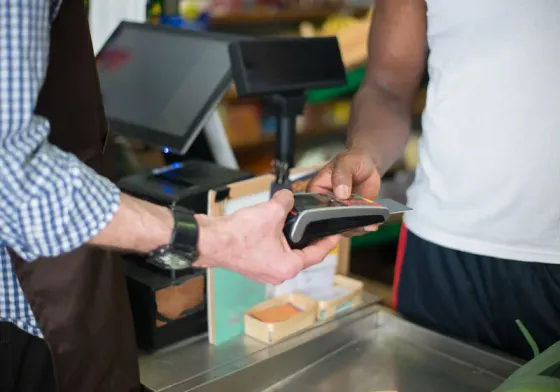













If you’re splitting a $400 purchase into four payments while a credit card balance sits on your statement, you’re watching the wrong debt.
The pay-in-4 charges you nothing. The card charges about 22%. And according to the Fed’s own data, that pairing is the typical setup, not the exception.
What the Fed printed, and what it didn’t
The Federal Reserve released its 2025 Survey of Consumer Finances on October 9. It’s the deep, once-every-three-years look at family balance sheets. The report says 12% of families had a buy now, pay later balance in 2025, up from 7% in 2022. The typical balance was $400.
The Fed says BNPL “explains nearly all the growth” in families holding other installment loans. Then it moves on.
So we downloaded the Fed’s public data file and lined BNPL users up against everything else they owe.
77% of families with a BNPL balance also carried a credit card balance after their last payment. Among families without BNPL, 40%.
For the BNPL families carrying a card balance, the median card balance was $4,000. The median BNPL balance was $420. The card is about ten times bigger.
This isn’t a low-income story, either. The two groups report the same median income. What differs is the cushion: BNPL families held a median $4,000 in cash accounts, against $9,100 for everyone else. And 42% of them paid a loan late or missed one in the past year, versus 17% of families without BNPL.
The math on the debt that actually costs you
Banks charged 22.36% in August on card accounts that paid interest, per the Fed’s G.19 release.
Carry $4,000 at that rate for a year and you pay about $894 in interest. The $420 pay-in-4 costs $0 if every payment lands on time.
Here’s the uncomfortable part. Pay-in-4 isn’t the villain. For someone already carrying a card balance, splitting a purchase at 0% beats adding it to the card, which would cost roughly $11 over six weeks. The BNPL plan is the cheapest money these families owe.
It’s the tell, not the problem.
And for about half of them, the problem has an easy partial fix. 49% of BNPL families with card debt had at least as much in cash accounts as they owed on their cards. Not all of that is spare. Rent comes out of checking. But parking cash at a few percent or less while the card bills 22% is dumb math.
Do this
Write down every balance you owe and its rate. The pay-in-4 goes at the bottom of the list. The card goes at the top.
Keep enough in checking to cover a month of bills and every scheduled BNPL payment, so the 0% plan stays 0%. Then send the rest at the card. Run your numbers through our debt payoff calculator to see what each extra $100 saves.
If the card balance is too big to clear in a few months, price a fixed-rate personal loan. Banks’ 24-month personal loans averaged 11.90% in August on the same Fed release, about half the card rate. We ran the card-to-loan swap and its trap, and our loans hub and best loans picks show where to start.
Verdict: the 0% split is fine. Ignoring the 22% balance next to it isn’t.
How we counted
We used the Fed’s 2025 summary extract and its survey weights across all five data sets. Our counts match the Fed’s published 12% BNPL share, $400 median BNPL balance and 44.7% card-balance share. “Credit card balance” means money still owed after the most recent payment, so cards paid in full each month don’t count. “Late” is the survey’s question on whether any of the family’s loan payments in the past year were made late or missed. Cash means checking, savings, money market, call and prepaid accounts. For more on typical card balances, see our look at the $3,100 median.
How Candid Yak makes money. Some of the products we write about pay us if you apply or sign up through our links. That never changes our verdict, our rankings, or the numbers in this article. We call a bad deal a bad deal whether it pays us or not. Some brands shown in our comparison tools are placeholder examples while we finalize partner agreements, and we label them as such.
Sources
- Federal Reserve Board releases results of the 2025 Survey of Consumer Finances (Federal Reserve, October 9, 2026)
- Changes in U.S. Family Finances from 2022 to 2025: Evidence from the Survey of Consumer Finances (Federal Reserve Bulletin, October 2026)
- 2025 Survey of Consumer Finances, summary extract public data (Federal Reserve)
- SCF summary extract variable definitions, bulletin.macro.txt (Federal Reserve)
- G.19 Consumer Credit, terms of credit, released October 7, 2026 (Federal Reserve)