









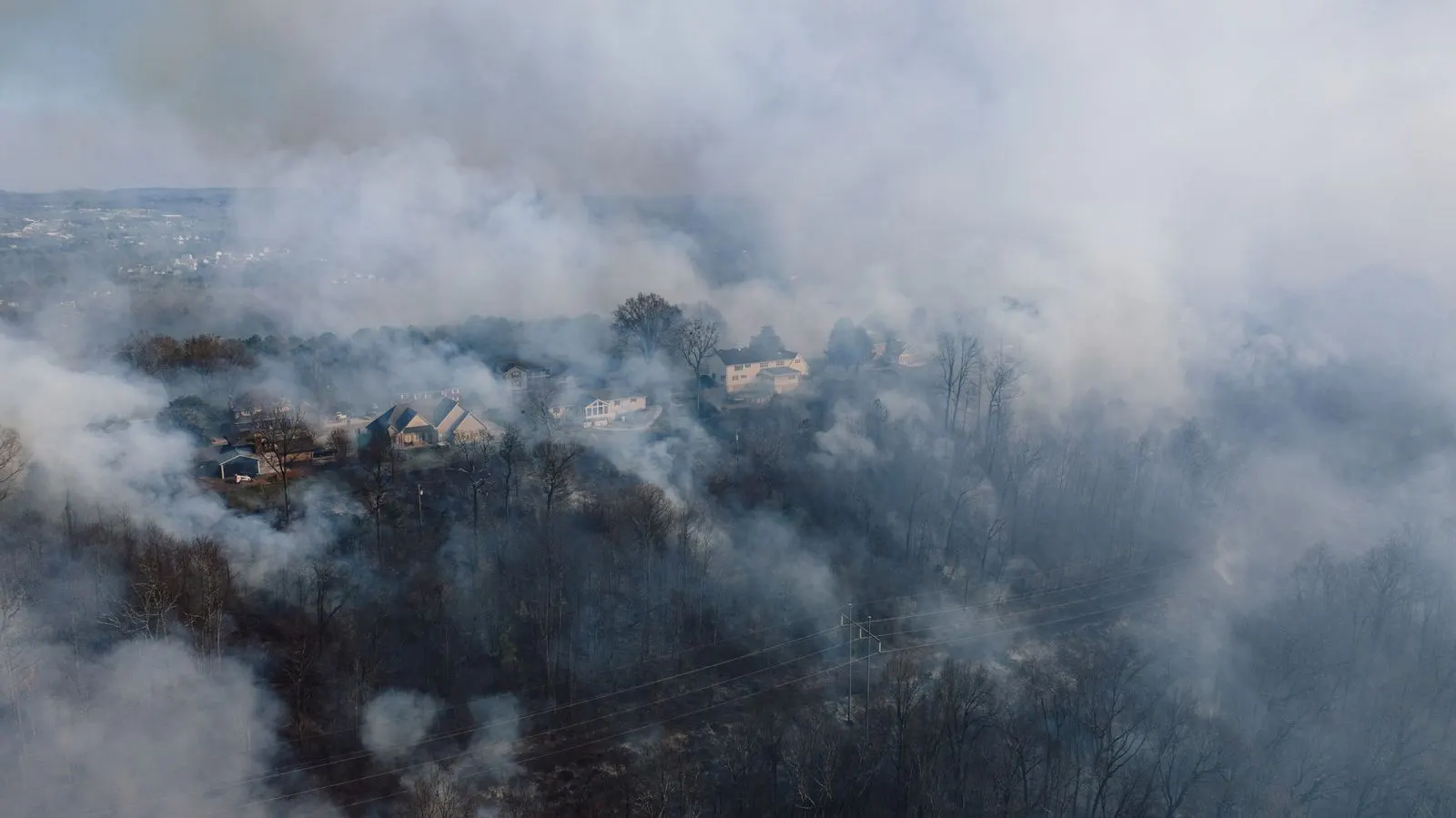
If your house is still standing after the January 2025 fires but smells like a campfire, California just passed the law you needed. It starts January 1, 2027. It doesn’t cover you.
The Smoke Damage Recovery Act, AB 1795, applies to claims “that occur on or after the operative date.” Your claim occurred in January 2025. The state’s own task force counted more than 13,000 claims from those fires on standing homes with smoke damage. Every one of them sits on the wrong side of that line.
What the law actually does
The Department of Insurance called it “the nation’s first science-based standards” for smoke-damaged homes. On a future fire, the rules are good. In a wildfire impact zone, meaning a ZIP code inside or touching the fire perimeter, your insurer has to pay for the sampling and testing needed to clear the house, subject to your policy’s terms. If it wants to inspect, it has 30 days. It can’t cut off your living expenses until the home is restored and cleared, up to your policy limit. You pick the restoration contractor. Late payments earn you interest.
Here’s the catch. The science part isn’t written yet. A companion bill, AB 1642, gives state toxics regulators until December 31, 2028 to adopt lead and asbestos rules, and until December 31, 2029 for everything else in the smoke. Until then, the interim standard covers lead and asbestos only.
Testing isn’t a small line item. The insurers’ own trade group told the task force mandatory testing could add $4,000 to $6,000 in claim costs per test panel. Real money, and on a 2025 claim nothing in the new law moves it off your bill.
The date that matters more
California already guarantees at least 24 months of additional living expenses after a declared emergency. That’s the money for rent while you’re out of the house. Count 24 months from January 2025 and the legal minimum runs out in January 2027, the same month the new law starts.
The law also says your insurer must grant up to 12 more months, 36 in all, if you’ve acted in good faith and hit delays in the reconstruction process that you couldn’t control. The statute’s examples include permit delays and a shortage of contractors or materials. Six-month extensions beyond that are available for good cause.
Do this now
Pull your policy and find your living-expense limit and end date. Then write to your insurer, before the 24 months are up, asking for the 12-month extension under Insurance Code section 2060(b)(1). List every delay in writing: the contractor who wouldn’t return calls, the testing your adjuster refused.
If your insurer is still refusing to test, quote Bulletin 2025-7 back to it. The department said it isn’t reasonable to make you “incur substantial costs to investigate” your own claim, and that when professional testing is warranted, it expects the insurer to “contract and pay for these services.” Then call the department’s hotline at 800-927-4357.
Rebuilding instead? Your lender may be sitting on the insurance check. California now makes it pay you at least 2% on that money. And check what your dwelling limit really covers before the next renewal. More on homeownership costs on our mortgages hub.
The detail
AB 1795 is Chapter 240 and AB 1642 is Chapter 239, Statutes of 2026. Each bill becomes operative only if the other one did. A survivor survey presented to the task force found owners of smoke-damaged standing homes reported the worst insurance outcomes of any group: 36% were satisfied with their insurer, against 55% of total-loss survivors.
How Candid Yak makes money. Some of the products we write about pay us if you apply or sign up through our links. That never changes our verdict, our rankings, or the numbers in this article. We call a bad deal a bad deal whether it pays us or not. Some brands shown in our comparison tools are placeholder examples while we finalize partner agreements, and we label them as such.
Sources
- AB 1795: Smoke Damage Recovery Act, chaptered text, digest and Senate floor analysis (CalMatters Digital Democracy, Chapter 240, Statutes of 2026)
- AB 1642: Wildfires: contamination standards, chaptered text and digest (CalMatters Digital Democracy, Chapter 239, Statutes of 2026)
- Governor signs landmark consumer protection package backed by Commissioner Lara (California Department of Insurance, September 30, 2026)
- Report of the Smoke Claims and Remediation Task Force (California Department of Insurance, March 9, 2026)
- Bulletin 2025-7: Insurance Coverage for Smoke Damage and Guidance for Proper Handling of Smoke Damage Claims (California Department of Insurance, March 7, 2025)
- Annual Notice: Significant California Laws Pertaining to Residential Property Insurance Policies, Declared State of Emergency (California Department of Insurance, 2025)