

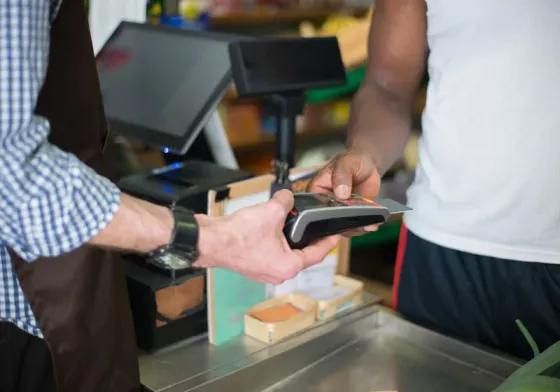











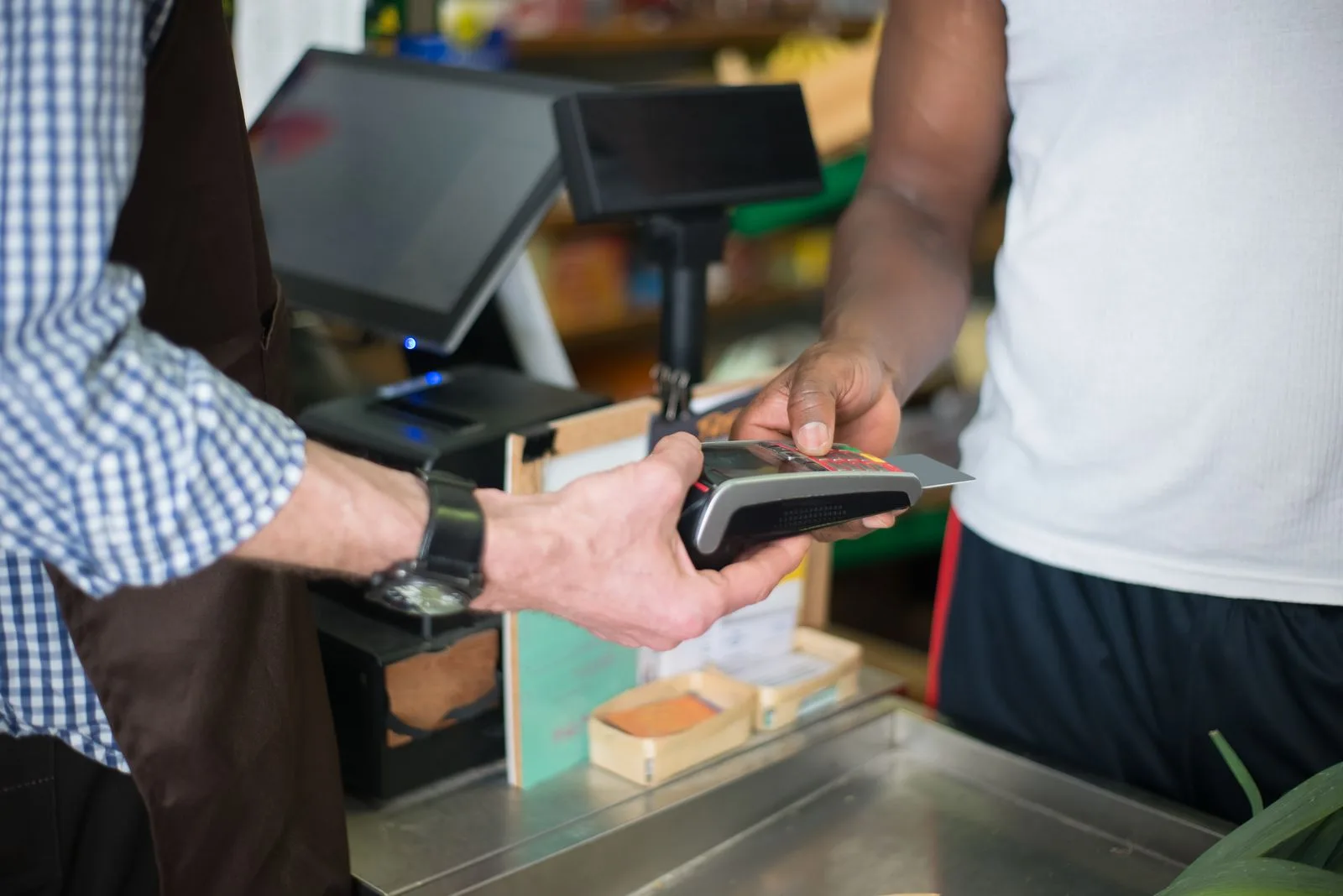
You are at a counter in Lisbon and the card reader asks a friendly question. Pay in euros, or pay in dollars?
Press dollars and you have just agreed to an exchange rate a stranger picked for you. Across Europe it runs about 5 percent worse than the one your own bank would have used. On $3,000 of charges over a two-week trip, that is roughly $150 for pressing the button that looked easier to understand.
The trick has a name: dynamic currency conversion. A conversion company sits between the terminal and your bank, offers to do the math in your home currency, and keeps a slice of the spread. The merchant usually gets a cut too. That is why the screen is so eager to help you.
Bankrate cites research putting the average markup across Europe near 5 percent, and documents one ATM where taking euros instead of Czech koruna cost 13.7 percent. WalletHub, updated in February 2026, says merchants may run a rate more than 10 percent above the normal one.
Paying in dollars does not get you out of your card’s foreign transaction fee either. Most issuers charge that fee because the merchant sits outside the United States, not because of which currency prints on the receipt. WalletHub stacks the two in its own math and puts the average card foreign transaction fee at 1.59 percent. You can pay twice for the same conversion.
Your rights at the terminal are better than you think
Visa spells this out for cardholders. Merchants and ATMs “should give you a choice to accept or decline currency conversion and must not choose on your behalf.” The terminal is also supposed to display the amount in both currencies, the exchange rate being used, and “additional fees or markup assessed.”
Count how many card readers have ever shown you that markup.
Verdict: dumb, and easy to fix. Paying in dollars buys you a worse rate and one convenience, which is seeing a number you already know how to read.
Do this on your next trip
Press the local currency. Euros in Portugal, yen in Japan, pesos in Mexico. Every time, including at hotel checkout and at the ATM, where the same screen shows up and the markup tends to be worse.
Check the receipt before you sign or walk away. If it came back in dollars when you chose the local currency, or the screen never offered you a choice at all, Visa’s answer is to decline the conversion and report it to your issuer. Call the number on the back of the card and open a dispute. Keep the receipt, because it shows which currency the charge actually ran in.
Before the trip, look up your card’s foreign transaction fee. Plenty of cards charge nothing, and on $3,000 of spending abroad that alone is about $48 back at the average 1.59 percent. Our credit cards hub and the best credit cards page carry our current picks.
Debit cards get the same screen, and cash machines push it harder than shop terminals do. Same answer. Local currency.
How Candid Yak makes money. Some of the products we write about pay us if you apply or sign up through our links. That never changes our verdict, our rankings, or the numbers in this article. We call a bad deal a bad deal whether it pays us or not. Some brands shown in our comparison tools are placeholder examples while we finalize partner agreements, and we label them as such.