











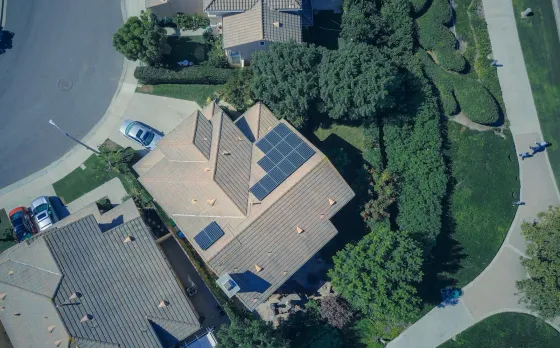





If you already own a Powerwall 3 and you just ordered a Model 3 or Model Y, you got a free upgrade: your car can now help keep the lights on in an outage. If you were hoping the car could replace a home battery, it can’t. Tesla built the feature so it only works through one.
On October 6, Tesla switched on Powershare home backup for the Model 3 and Model Y. Until now, the Cybertruck was the only Tesla that could do this. The promise is big. Tesla says a car starting at 90% charge, paired with a Powerwall, gives “over two days of backup for a home that uses 30 kWh a day,” according to Electrek’s write-up of the announcement.
Here’s the catch. The Powerwall 3 is required. Not recommended, required. Cybertruck owners can use a cheaper Powershare Gateway, but Electrek reports that “Tesla doesn’t offer that option for Model 3 and Model Y.”
The fine print keeps going. The car has to be ordered on October 1, 2026 or later. Older cars only qualify if they happen to have the new bidirectional inverter Tesla calls PCS2 Lite. You have to call Tesla support to turn it on. Powerwall 2 support is “coming soon.” And you can’t sell any of that stored power back to the grid.
Translation: the car is a range extender for a battery you still have to buy.
13.5 kWh: the usable energy in one Powerwall 3 (EnergySage). A house using 30 kWh a day burns through it in about 11 hours.
That’s why the car matters if you already have the battery. Eleven hours of backup becomes two days, per Tesla’s own claim. For a Powerwall owner, that’s a real upgrade, and it costs nothing.
For everyone else, the price of getting in hasn’t moved. Canary Media puts the Powerwall 3 at $8,200 retail, plus “several thousand dollars more” to install and a $595 Wall Connector. EnergySage’s typical all-in installed cost is $13,473 before incentives. In 2026 there aren’t any federal incentives to subtract. The IRS instructions for Form 5695 say you “can’t claim residential clean energy credits for expenditures made after December 31, 2025,” and that’s the credit that used to cover home batteries. We walked through what’s left in our federal solar tax credit explainer.
So the verdict splits cleanly.
If you have a Powerwall 3 and a qualifying Model 3 or Y, call Tesla support this week and get it activated. While you’re in the app, check your battery’s backup reserve too. We covered why that number matters when the utility cuts power, in our post on shutoffs.
If you don’t own a Powerwall, don’t let “your car is a battery now” sell you one. Price the Powerwall as if the car didn’t exist, at full price with no 30% credit, and decide whether outage cover is worth about $13,000 to you. Sometimes it is. Usually that depends on how often your power goes out, not on what’s parked in the garage.
If you drive a Cybertruck, you’re the one buyer with a cheaper route. Canary puts Tesla’s Cybertruck backup hardware package at $1,990, plus $1,800 to $2,200 to install, with no Powerwall needed.
Before you sign any storage quote, run it through our solar calculator and compare installers on our best solar companies page. More on the basics lives on the solar hub.
The detail, for the curious: Tesla lists a maximum continuous output of 11.52 kW for the Powerwall setup, and the feature is available only in the US and Puerto Rico. A car that can run your fridge for two days is a good thing to have in the garage. Just don’t let it talk you into a $13,000 battery.
How Candid Yak makes money. Some of the products we write about pay us if you apply or sign up through our links. That never changes our verdict, our rankings, or the numbers in this article. We call a bad deal a bad deal whether it pays us or not. Some brands shown in our comparison tools are placeholder examples while we finalize partner agreements, and we label them as such.
Sources
- Tesla Powershare home backup comes to Model 3 and Model Y with Powerwall 3 (Electrek, October 6, 2026)
- Tesla is now making more EVs that can double as a home battery (Canary Media, October 6, 2026)
- Tesla Powerwall review: cost, capacity and output (EnergySage, updated May 15, 2026)
- Instructions for Form 5695, Residential Energy Credits (IRS)