















If you were watching for June’s housing report to finally break homebuyers’ way, don’t be fooled by the headline. Yes, total housing starts jumped 19% from May to a 1.43 million annualized rate. No, almost none of that was houses.
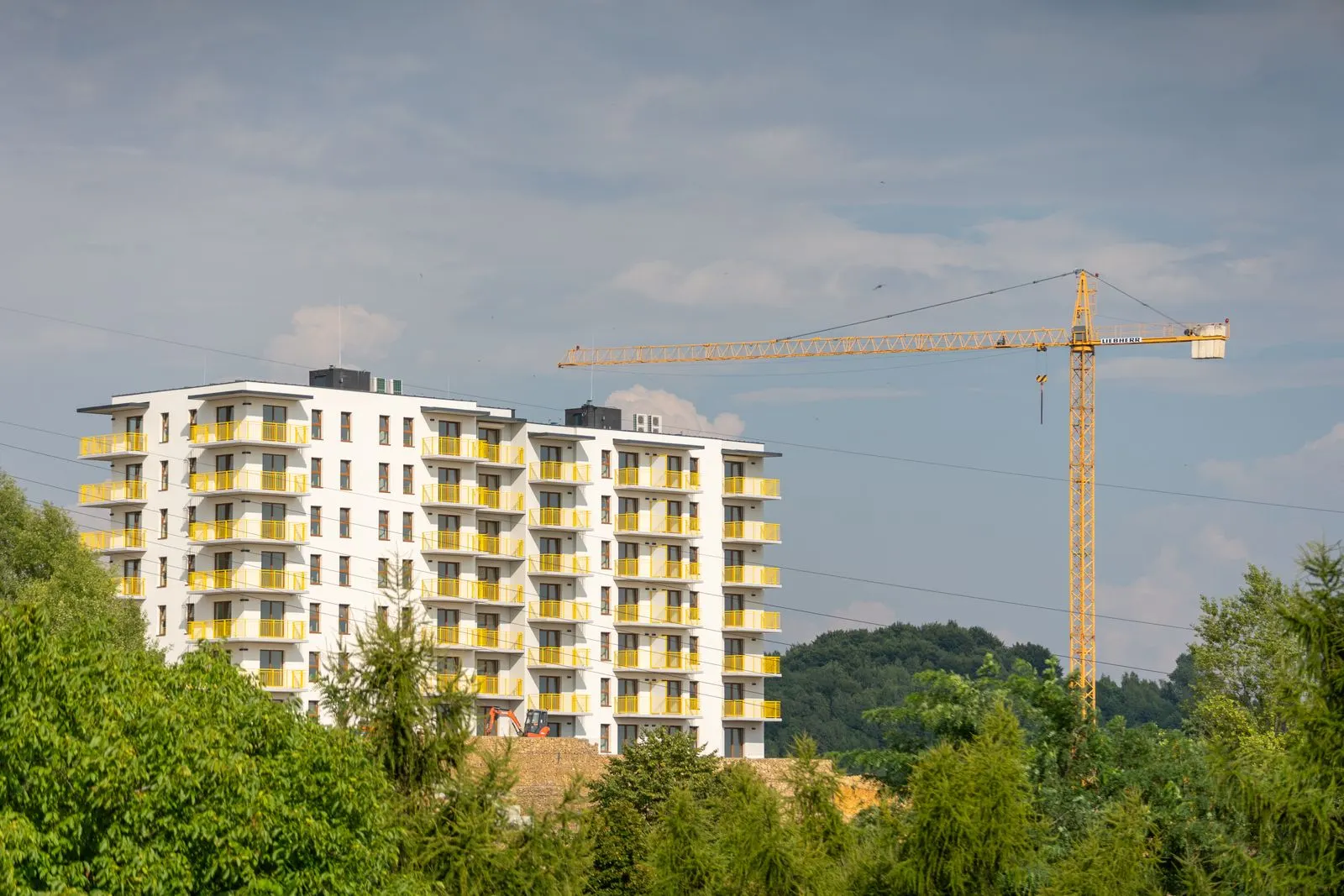
Multifamily buildings of five units or more, which is the Census Bureau’s polite word for apartments, jumped 76% month over month to 513,000 units. Single-family starts, which is what any first-time buyer actually needs, fell 0.2% to 895,000. That is the third consecutive month of single-family decline.
Census and HUD released the data Thursday, July 17. Most of Thursday’s headlines quoted the +19% total. Split the number and the story flips. Multifamily rebounded from May’s 41% collapse, so this is a bounce off a low, not a boom. Single-family builders keep shrinking.
Why? Freddie Mac’s July 16 survey put the average 30-year fixed at 6.55%, the highest since May. The National Association of Realtors’ Pending Home Sales Index fell 5.4% in June. NAR chief economist Lawrence Yun said the “highest mortgage rates in nearly a year and the record-high national median home price” together are “contributing to a tepid housing market that is especially difficult for first-time homebuyers.” Builders read those two numbers and stop breaking dirt on single-family lots.
Translation: at these rates, builders build for renters, not buyers. That’s the market talking.
Show the math. On a $440,600 median-priced home, ten percent down, at a 6.55% 30-year fixed, your principal-and-interest lands near $2,520 a month. Add $500 for taxes and $200 for insurance and you clear $3,200 before HOA and PMI. That payment used to be a $500,000 house at 4%. It is now a starter home at 6.55%. The house didn’t shrink. The rate ate the space.
Here’s the move.
If you’re renting and watching your metro’s rent, note this: 513,000 annualized apartment starts is a lot of unit supply coming online through 2027. Rent relief tends to follow multifamily deliveries by 12 to 18 months, in metros that are actually building. Ask your landlord in writing whether the current rent is negotiable at renewal. Point to the pipeline if it helps.
If you’re house-hunting, don’t wait for the single-family supply relief that isn’t coming. The build-for-buyer side of the market is contracting, not expanding. Your leverage is the seller’s time on market and the price cut history, not a future pipeline. Run our mortgage calculator with today’s rate before you write an offer, and compare quotes on our best mortgage lenders page.
If you already own and are watching your equity: multifamily construction booms tend to soften rent, not house prices. Existing-home inventory is what moves your resale, and June existing-home inventory sat at 4.6 months. Steady. File this away and check the July existing-home number when NAR drops it later this month.
The +19% headline was built for reporters. The -0.2% single-family line is the one that matters for you.
How Candid Yak makes money. Some of the products we write about pay us if you apply or sign up through our links. That never changes our verdict, our rankings, or the numbers in this article. We call a bad deal a bad deal whether it pays us or not. Some brands shown in our comparison tools are placeholder examples while we finalize partner agreements, and we label them as such.
Sources
- New Residential Construction Press Release, June 2026 (U.S. Census Bureau and HUD, July 17, 2026)
- Housing Starts Rebound Sharply in June, But Only in Multifamily (RISMedia, July 17, 2026)
- Freddie Mac Primary Mortgage Market Survey, week ending July 16, 2026
- Existing-Home Sales, National Association of Realtors (June 2026)