


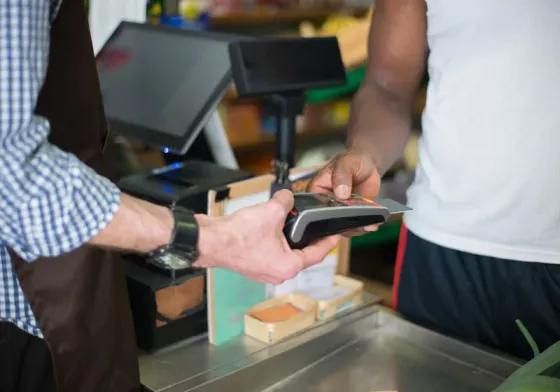













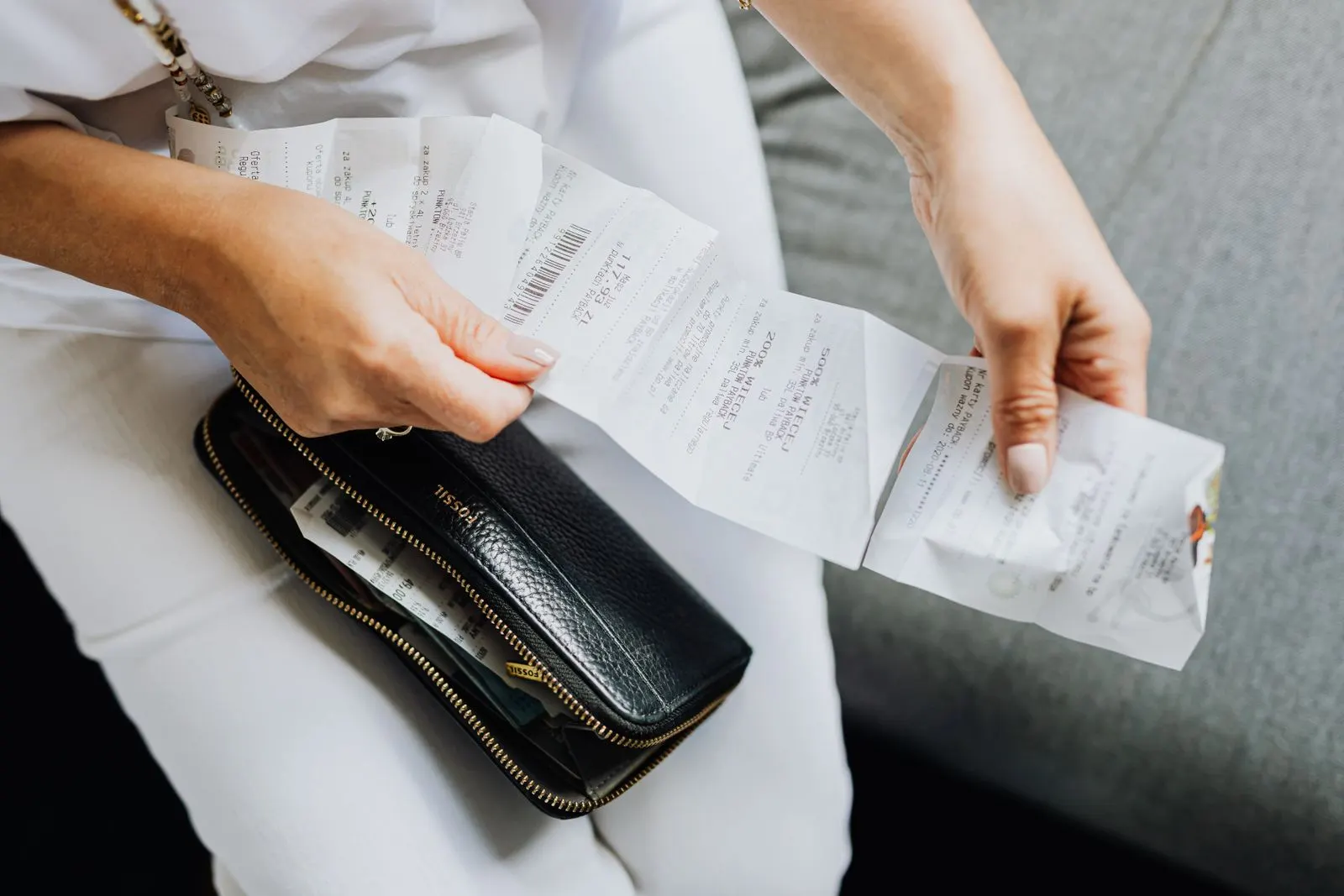
If your grocery bill feels tighter and you’ve quietly stopped grabbing the thing at Target you used to grab without thinking, you’re not alone. The Census Bureau’s June retail sales report came out Thursday, and the category split tells the same story a lot of kitchen tables tell.
Total retail sales rose 0.2% month over month, below the 0.3% economists expected. Fine on the headline. Underneath: grocery store sales fell 0.4%. Clothing fell 0.3%. Health and personal care fell 0.8%. The +0.2% was carried by auto dealers (+2%) and online retailers (+1.9%), plus a 5.3% drop at gas stations that reflected cheaper prices at the pump, not less driving.
Translation: consumers are spending on the big-ticket and cutting where the receipt is small and repetitive. The grocery aisle is where the belt is tightening.
Here’s the catch. This isn’t the recession-style pullback where people stop buying everything. It’s the selective one. A 30-year fixed mortgage at 6.55% for the week of July 16, credit card APRs averaging 25.16% per Forbes Advisor’s July 13 index, and a grocery basket still 3.4% more expensive than last June per BLS. When those three numbers stack up, households do exactly what June’s cash registers just showed. They pay the mortgage. They swap the name-brand shampoo for the store brand. They skip the new shirt for now.
The University of Michigan’s July preliminary consumer sentiment reading came out the next day: 54.4, up 4.9 points from June. That looks like people feel better. Read the fine print. The survey ran June 23 through July 13. The U.S.-Iran ceasefire unraveled in early July, mid-survey, and oil is back above $80 a barrel. Most respondents answered before the escalation, while cheaper gas was still the story. Feelings can move fast. Grocery bills can’t.
Show the math. The BLS food-at-home index is up 3.4% year over year. On an $800-a-month grocery spend, that’s $27 more, every month, before you cut anything. Add a $35 overdraft the week payroll times out wrong, plus one $32 credit card late fee, and you’re $94 behind for reasons that had nothing to do with the actual price of anything. Real money.
Here’s the move if this is you. Three specific things, none of which take a weekend.
Turn on autopay for at least the minimum on every credit card you carry. That kills the $32 late fee. Route it to a checking account that always clears. Not optional.
Opt out of overdraft coverage at your bank, in writing. Under Regulation E, opting out means the bank declines a debit-card or ATM charge that would take you under, instead of paying it through and charging you $35. The decline is free. The fee is not. If your bank hides the opt-out, that is because the opt-out kills the bank’s fee revenue on you.
Do a unit-price sweep at the grocery store for one week on shelf-stable staples only: cereal, pasta, rice, canned goods, snacks. Store-brand versions typically run 20 to 30 percent cheaper, and on those categories the quality gap is close to nothing. Our savings calculator shows what the $50 to $100 a month you save on the swap earns in a high-yield account instead of at Kroger.
The +0.2% headline is real. So is the -0.4% in the grocery aisle. If you’re the -0.4%, own the pullback. Make it strategic, not accidental.
How Candid Yak makes money. Some of the products we write about pay us if you apply or sign up through our links. That never changes our verdict, our rankings, or the numbers in this article. We call a bad deal a bad deal whether it pays us or not. Some brands shown in our comparison tools are placeholder examples while we finalize partner agreements, and we label them as such.
Sources
- Advance Monthly Sales for Retail and Food Services, June 2026 (U.S. Census Bureau, July 16, 2026)
- Consumer Price Index Summary, June 2026 (Bureau of Labor Statistics, July 14, 2026)
- Preliminary: Consumer sentiment increased 4.9 points in July (ABA Banking Journal on University of Michigan Survey, July 2026)
- Average Credit Card Interest Rate, week of July 13, 2026 (Forbes Advisor)
- Freddie Mac Primary Mortgage Market Survey, week ending July 16, 2026